- Home
- Foot & Ankle Conditions
- Ankle Sprains and Chronic Ankle Instability
Ankle Sprains and Chronic Ankle Instability
Ankle sprains often occur while participating in sports, walking on uneven surfaces, or just awkwardly planting the foot.
The most frequent type of sprain is called an inversion sprain, which is when the outer ligaments stretch or tear as the foot is rolled outward, with the sole facing in.
Less common is a medial sprain, which is when the foot rolls inward and overstretches the inside ankle ligaments.
- When to see a doctor for an ankle sprain
- What are the symptoms of an ankle sprain?
- How do you diagnose the severity of a sprained ankle?
- What is a high ankle sprain?
- How are ankle sprains treated?
- When ankle sprains turn into chronic ankle instability
- Why partner with UFAI for your ankle treatment?
- Ankle Sprain FAQs
- Should I see an orthopedist or a podiatrist for my sprained ankle?
- Ankle sprain vs ankle fracture, what's the difference?
- How do you prevent ankle sprains?
When to see a doctor for an ankle sprain
You won’t be able to diagnose your ankle injury from home, so it’s crucial to visit a foot and ankle specialist for evaluation as soon as possible. A doctor can accurately diagnose the severity of the sprain. This diagnosis is vital because each level of injury requires a specific treatment plan to ensure proper healing.
There's also a risk of overlooking more serious injuries, such as fractures or damage to the cartilage, which can present with similar symptoms but necessitate different treatments.
If left untreated, or not treated properly, an ankle sprain may never heal correctly. The condition may degenerate, leading to chronic ankle instability, arthritis and tendonitis.
What are the symptoms of an ankle sprain?
While pain is an obvious symptom of an ankle sprain, there are other ankle sprain symptoms to look out for as well. Symptoms include:
- Ankle pain and swelling on the outside of the ankle and foot.
- Ankle or foot pain when placing your foot on the ground.
- Bruising and discoloration in the injured area.
- Imbalance. It may feel as though the ankle can roll again at any time.
- Locking or clicking of the ankle when it is moved.
How do you diagnose the severity of a sprained ankle?
After suffering for months from an ankle sprain that didn't heal, Cynthia is feeling relief from just a few sessions of physical therapy at UFAI.
While a physical examination can help determine if a problem is present, our ankle surgeons will also take X-rays to look for bone fractures or chips. We also have access to special stress X-rays that allow us to determine the amount of dislocation.
At University Foot & Ankle Institute, we also have MRI scans to visualize the ligaments, tendons, and cartilage of the ankle. This allows us to fully visualize and determine the extent of your injury.
There are three grades of severity for sprained ankles:
Grade 1 Sprain – Mild
The ligaments are only slightly stretched, marked by swelling and soreness in the injured ankle.
Grade 2 Sprain – Moderate
There is a small tear in the ligament that loosens the ankle joint. The ankle appears swollen, and patients feel pain and have a hard time putting weight on the injury.
Grade 3 Sprain – Severe
A severe sprain is a complete tear of the ligament. There is quite a bit of pain and swelling. The ankle will feel very weak and patients won’t be able to put any weight at all on the foot.
Repeat sprains of the same ankle can cause a chronic ankle sprain. Chronic ankle sprains can cause pain for months, or even years, after the initial trauma, flaring up whenever the patient tries to play sports, dance, or exercise.
What is a high ankle sprain?
A high ankle sprain is when you tear or damage the high ankle ligaments that connect the tibia to the fibula. High ankle sprains involve turning inward or outward while your foot is flexed up. With their sports medicine experience, the podiatrists at University Foot & Ankle Institute are well-equipped to treat high ankle sprains — which generally affect athletes.
How are ankle sprains treated?
Ankle sprains are among the most common injuries for children and adults. They are also the most under-treated. Repeat sprains and sprains that aren't treated properly can result in re-injury, long-term pain, chronic ankle instability, and unnecessary surgeries. For this reason, it is important to have the injury evaluated by a board-certified foot and ankle specialist.
RICE method
Perhaps one of the most well-known sports injury treatment methods, RICE is actually an acronym. The RICE method stands for:

Rest: Avoid putting weight on the foot as much as possible, especially for the first week. Limit walking, and use crutches or a scooter to get around.
Ice: Use ice to bring down the swelling. Wrap a bag of ice or an ice pack in a paper towel and apply it to the ankle immediately after the injury. Ice the sprain for 15-20 minutes every three to four hours for the first couple of days after the injury.
Compression: Athletic tape or elastic wrap can limit the joint’s motion and compress the injury. Compression helps your ligaments to heal and prevent further injury.
Elevate: Prop the leg up at or above the level of your head.
Immobilization
We may recommend a splint, ankle brace, or support boot to allow weight-bearing without putting extra strain on the damaged joint. Keeping the ankle still allows the injury to heal and avoids further injury.
Ankle brace
If there is minimal damage, a simple lace-up ankle brace will be used with weight-bearing. An elastic bandage can also be used to immobilize the joint and provide ankle support.
Physical Therapy
Physical therapy is often critically important to a successful ankle sprain recovery. An outpatient physical rehabilitation program can be the difference between a fully healed ankle and chronic ankle instability.
Successful physical therapy is not only for reducing swelling and inflammation, the physical therapy exercises improve strength and flexibility. Keeping your ankle strong and flexible can help prevent future re-injury.
Pain medication
For pain relief, you can use nonsteroidal anti-inflammatory drugs (NSAIDs) like ibuprofen.
Ankle surgery
In very severe cases, our orthopedic foot and ankle specialist might recommend surgery. We do have minimally invasive surgical options available to treat your injury without excessive downtime or scarring.
An arthroscopy is performed through a small incision near the joint. Our doctor inserts a narrow, flexible camera into the incision to see the area and makes the necessary repairs.
It is important to remember that proper protection of the ligament after a sprain and active physical therapy during a sprain will result in a better long-term outcome. Even with proper protection and bracing, 30% of ankle sprains can have secondary factors leading to pain.
These include chronic ankle instability from loose ligaments, tendon tears, cartilage damage, and scar tissue in the ankle joint. These problems can cause ankle instability, pain, and swelling that often need to be corrected surgically.
When ankle sprains turn into chronic ankle instability
It’s estimated that roughly 30% of individuals will develop some level of chronic ankle instability after the initial lateral ankle sprain due to under-treatment of the injury.
Chronic ankle instability is a condition characterized by a feeling of the ankle "giving way" during normal activities. It is often caused by a previous ankle injury that did not fully heal or was not properly rehabilitated. People with chronic ankle instability may experience pain, swelling, weakness, and difficulty walking or participating in sports. Treatment typically involves physical therapy, strengthening exercises, and sometimes bracing or surgery. Our surgeons utilize the minimally invasive InternalBrace repair system. The InternalBrace is a revolutionary technique that strengthens traditional repair methods. shortens recovery and increases the chances of full recovery.
Why partner with UFAI for your ankle treatment?
University Foot and Ankle Institute is one of the largest and most technologically advanced providers of foot and ankle care in the country. The team of podiatrists at the Institute offers expert knowledge in foot and ankle evaluation and orthopedic surgery for children and adults.
Our on-site physical therapy services, comprehensive imaging, and bracing facilities allow for a team approach and one-stop care of your ankle injury.
Dr. Baravarian, DPM, and our team of healthcare professionals documented the largest-ever study on a triad injury of the ankle. This triad consists of chronic scar tissue, ankle instability, and tendon tear that can occur together due to ankle sprains. Our revolutionary surgical treatment of these cases has resulted in over a 97% return to full and unrestricted activity in our study group of more than 700 cases.
UFAI has worked with many orthopedic product companies to build or improve their products related to chronic ankle instability and pain. From bone and ligament anchors to tendon repair equipment and techniques, we are at the forefront of this revolutionary technology and techniques for foot and ankle care.
Our nationally recognized doctors specialize in a wide array of foot and ankle conditions, including Achilles tendon injuries, bunions, plantar fasciitis and heel pain, diabetic foot conditions, flat foot care, ankle arthritis (including ankle replacement), hammertoes, neuromas, joint replacement, and sports injuries.

Ankle Sprain FAQs
Should I see an orthopedist or a podiatrist for my sprained ankle?
When deciding whether to see an orthopedist or a podiatrist for foot and ankle problems, it's essential to understand the expertise of each specialist. From day one, a podiatrist emphasizes the foot and ankle in their training. They specialize exclusively in the foot and ankle, offering detailed knowledge and treatment options for a variety of conditions specific to these areas.
Orthopedic training, on the other hand, must include ALL areas of the body. Rarely is there an emphasis on the foot and ankle during this time. However, an orthopedic surgeon may select to perform an additional year of fellowship training in foot and ankle. This is the point at which an orthopedist will learn detailed complexities of foot and ankle care as we have during our training.
Ankle sprain vs ankle fracture, what's the difference?
It may be possible to walk on minor breaks, so do not let this be a determining factor as to whether or not you have a broken or fractured ankle. Additionally, you can have pain, swelling, and bruising in both fractures and sprains.
Read about the 5 signs your ankle sprain might be a fracture.
How do you prevent ankle sprains?
Some ankle sprains simply can’t be prevented. Here are a few tips for keeping your ligaments safe and strong:
- Take caution on slippery or uneven surfaces.
- Stretch before and after athletic activities: prepare your body and muscles for the activity. Changes in your activity level expose your body to injury. Balance: improving balance will improve your ability to control your body in all types of positions
- Strength training: the stronger the muscles that support the ankle, the less likely you are to suffer a sprain
- Wear well-fitted shoes, appropriate for your activity
- Avoid sudden turns and changes in direction during athletic activities
- Be aware of the surface on which you walk, run, or jump
- Taping and bracing to support the ligaments
Sources
Thomas G. DiPasquale, Ellen J. MacKenzie, And The LEAP STUDY Group. The mangled foot and ankle: the role of soft tissue coverage. J Orthop Trauma. Jan;27(1):43-8, 2013.
Watch Our Videos About Chronic Ankle Instability (6)





-
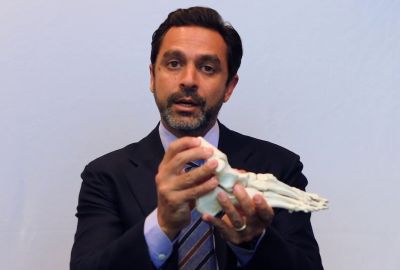
Foot and Ankle Surgeon and Director of University Foot and Ankle Institute

Dr. Bob Baravaria DPM, FACFAS is a Board-Certified Podiatric Foot and Ankle Specialist. He is an assistant clinical professor at the UCLA School of Medicine and serves as Director of University Foot and Ankle Institute.
Dr. Baravarian has been involved in athletics his entire life and played competitive tennis in high school and college. He has an interest in sports medicine, arthritis therapy, and trauma/reconstructive surgery of the foot and ankle. He is also fluent in five languages (English, French, Spanish, Farsi, and Hebrew),

Read Our Blog Articles About Chronic Ankle Instability
 This is for Dr. Carter and his office staff. Prior to my appointment, all of his staff was knowledgeable, responsive, and frien...Sara P.
 Great experience. Great communication. Great direction for my care. Very happy I chose to go with this particular doctor and o...Christopher R.
- Great service and care. Highly recommend Dr. Franson.David B.
- If you have to go see a Doctor than this is a great experience.Frank M.
- My doctor was great. Really greatRudolph B.
- Good.David E.
- Your Santa Barbara office and Dr. Johnson always give me excellent care!Jayne A.
- Dr. Gina Nalbadian was amazing!! I came in with an emergency foot situation and she had wonderful bedside manner and resolved m...Danielle C.
 Excellent experience. It was my first visit and I was quite nervous. Started out pleasant as I was assisted by a patient headin...Grace W.
- I was frustrated that after 3 weeks I still hadn’t heard back about my PT referral status. And I did sit in a room for over 30 ...Sarah C.
- I’m very pleased with Dr. Kelman.Alan S.
- Extremely friendly staff. Very professional. Always on time.Jim C.



-
 Listen Now
5 Signs your Ankle Sprain Might be a Fracture
Read More
Listen Now
5 Signs your Ankle Sprain Might be a Fracture
Read More
-
 Listen Now
Kids’ Feet and Growth Plates: 5 Problems to Watch For
Read More
Listen Now
Kids’ Feet and Growth Plates: 5 Problems to Watch For
Read More
-
 Why Do So Many Pro Athletes Suffer from High Ankle Sprains?
Read More
Why Do So Many Pro Athletes Suffer from High Ankle Sprains?
Read More
-
 Listen Now
5 Reasons Why You Have Pain on the Outside of Your Foot
Read More
Listen Now
5 Reasons Why You Have Pain on the Outside of Your Foot
Read More
-
 Listen Now
7 Causes of Inner Ankle Pain Revealed!
Read More
Listen Now
7 Causes of Inner Ankle Pain Revealed!
Read More




